


An irrigation system is only as good as the plan behind it. Zones, timing, and coverage all need to match your landscape’s actual water needs, not a one-size-fits-all setup, so plants get what they need without waste.
Sprinkler zones and drip lines are laid out based on plant type, sun exposure, and soil, so different areas of the yard get the right amount of water instead of a blanket schedule.
Smart controllers, rain sensors, and properly sized zones reduce runoff and waste, which matters in a region where every watering day counts.
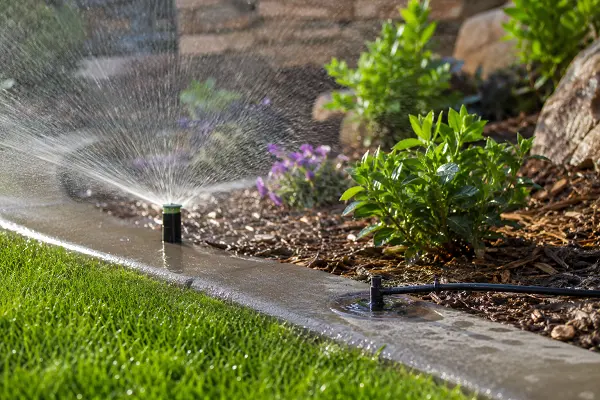
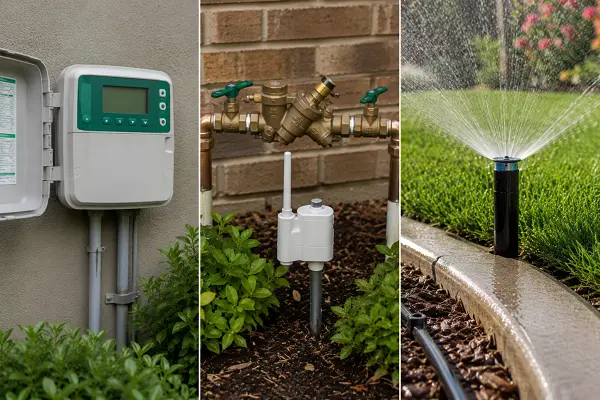
New sprinkler systems are designed and installed zone by zone, matched to lawn size, plant beds, and existing landscape features.
Drip lines deliver water directly to plant roots, reducing evaporation and runoff, especially useful for garden beds and drought-tolerant plantings.
Weather-based smart controllers adjust watering automatically, cutting waste compared to a fixed schedule.
Backflow devices and rain or freeze sensors are installed to meet Texas state requirements and protect the system through winter.
Broken heads, leaks, and coverage gaps are diagnosed and fixed, and zones are adjusted as a landscape grows and changes.
Lawn areas, planting beds, slope, and existing landscape features are mapped before any zones are planned.
Zones are grouped by plant type and water need, so shrubs, lawn, and drip areas aren’t watered on the same schedule.
Piping, valves, heads, and controllers are installed to the approved design, with backflow prevention and sensors included as required.
Coverage, pressure, and zone timing are tested and adjusted before the system is handed over.
Georgetown Water Utility sets outdoor watering days by address. Rules can tighten further during drought stages, so a new system is programmed to work within the active watering schedule.
Clay’s uptake rate also shapes how a system is programmed. Zones are set to cycle and soak in short intervals rather than running continuously, so water has time to reach root depth instead of running off before it’s absorbed.
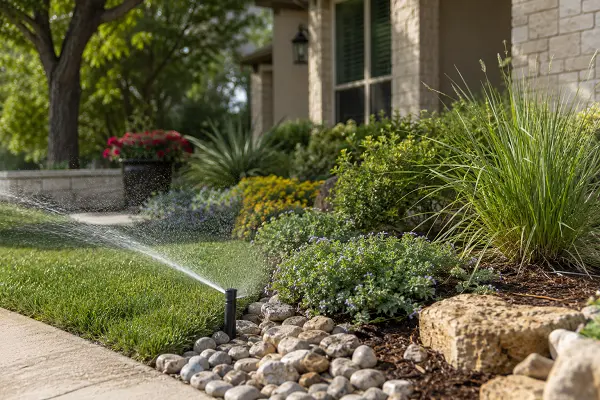
Irrigation systems are planned around applicable Texas requirements for water efficiency, system design, and backflow protection.
Watering cycles are designed around how clay soil absorbs water, helping reduce runoff and waste.
Every installation accounts for Georgetown's watering schedule and current drought restrictions.
You'll know what's being installed, why it's being installed, and how to operate the system once the project is complete.
Irrigation installations may be subject to local permitting and inspection requirements. Installations must also comply with applicable Texas irrigation standards. Current requirements should be confirmed with the City of Georgetown before work begins.
New and modified irrigation systems must comply with applicable Texas and local water-conservation requirements, including any required rain, moisture, or freeze sensors.
Professional landscape irrigation work in Texas is regulated by the Texas Commission on Environmental Quality. Homeowners may qualify for an exemption when installing a system on their own property, but applicable installation and local requirements still apply.
Georgetown Water Utility assigns outdoor watering schedules and may introduce additional restrictions during drought stages. Irrigation controllers can be programmed around the current watering schedule and adjusted when restrictions change.
Sprinkler systems distribute water across broader areas such as lawns, while drip irrigation delivers water directly around plant roots and is commonly used for planting beds and similar areas.
Cost depends on property size, number of zones, site conditions, and whether features such as drip irrigation or smart controls are included. A site assessment provides a more accurate estimate for the property.
Schedule an irrigation consultation in Georgetown, TX and get a system designed around your landscape and local water requirements.