


Standing water in a yard isn’t just inconvenient; it drowns plants, erodes beds, and stresses the soil around a home’s foundation. Understanding how clay soil causes flooding is the first step in addressing the poor drainage and runoff common in our area. This is solved at the yard level through grading, plantings, and features built into the landscape itself.
Drainage work is planned as part of the overall landscape, not as a separate system bolted on afterward, so the fix looks intentional rather than utilitarian.
Every property drains differently based on grade, soil, and existing structures, so a drainage plan starts with observing how water moves across your specific yard.
Reshaping the slope of a yard redirects water away from the house and low-lying areas without adding a single structure.
A swale is a shallow, graded channel that carries water across a property naturally, often doubling as a planted feature rather than a visible ditch.
A dry creek bed manages runoff while adding a designed, natural-looking element to the landscape, functional and attractive at once.
Perforated pipe and gravel move water away from beds, low spots, and problem areas within the landscape itself.
Extending downspout discharge points ties roof runoff into the landscape's overall drainage path instead of dumping it at the foundation.
Plantings, ground cover, and grading work together to stop soil loss on slopes and around beds.
Grade, soil type, and problem areas are evaluated to understand where water collects and why.
A plan is developed using grading, swales, dry creek beds, or French drains, whichever fits how water moves across the property.
Grading, piping, and plantings are installed to direct water away from structures and problem areas.
Water flow is confirmed before the project is considered complete, not just assumed from the design.
Georgetown’s clay-heavy soil holds water at the surface longer than sandy or loamy soil would allow, which is why yards here pool and stay saturated after rain. Poor drainage compounds this further, keeping soil wet against a home’s foundation and stressing plant roots that need periods of dry-out between waterings. Grading and swales are especially effective on clay, since they move water along the surface before it has a chance to sit and soak in unevenly.
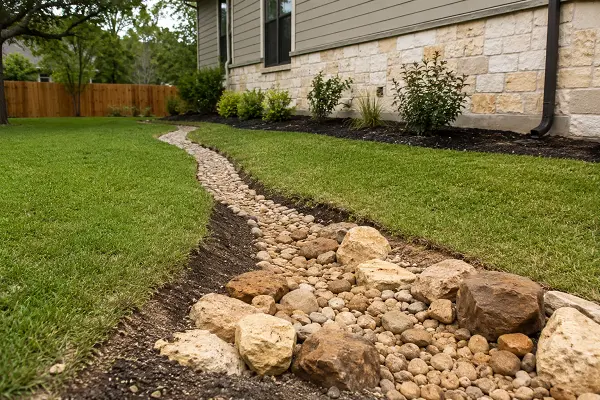
Drainage features are designed to look intentional, not like an add-on repair.
Grading and drainage work account for how slowly Georgetown's soil absorbs water.
Drainage is planned alongside plant beds, lawn areas, and hardscape, not as an isolated fix.
You'll understand the plan and why a particular solution fits your property before work begins.
Landscape drainage manages surface water across the yard using grading, swales, dry creek beds, French drains, and other landscape features. Foundation drainage and waterproofing systems installed specifically to address structural or below-grade water problems are separate services typically handled by foundation or waterproofing contractors.
Permit requirements depend on the scope of the grading and drainage work. Larger grading changes or work that affects established drainage patterns may require City review or permitting. Requirements should be confirmed with the City of Georgetown before significant grading or drainage work begins.
Yes. Texas law restricts diverting or impounding the natural flow of surface water in a way that damages another person’s property. A landscape drainage plan should account for where water will go rather than simply moving the problem to a neighboring yard.
Clay soil absorbs water slowly and can stay saturated for days after rain. This makes proper grading and surface drainage especially important here, since water that can’t drain down often has to be moved along the surface instead.
A French drain uses buried perforated pipe and gravel to move water underground, while a swale is a shallow graded channel that moves water across the surface. Both can be part of an overall drainage plan, depending on the site.
Cost depends on the scope of grading, the drainage method used, and the size of the affected area. A site visit is the best way to get an accurate estimate for your property.
Schedule a landscape drainage consultation in Georgetown, TX and get a plan built around how water moves across your yard.