

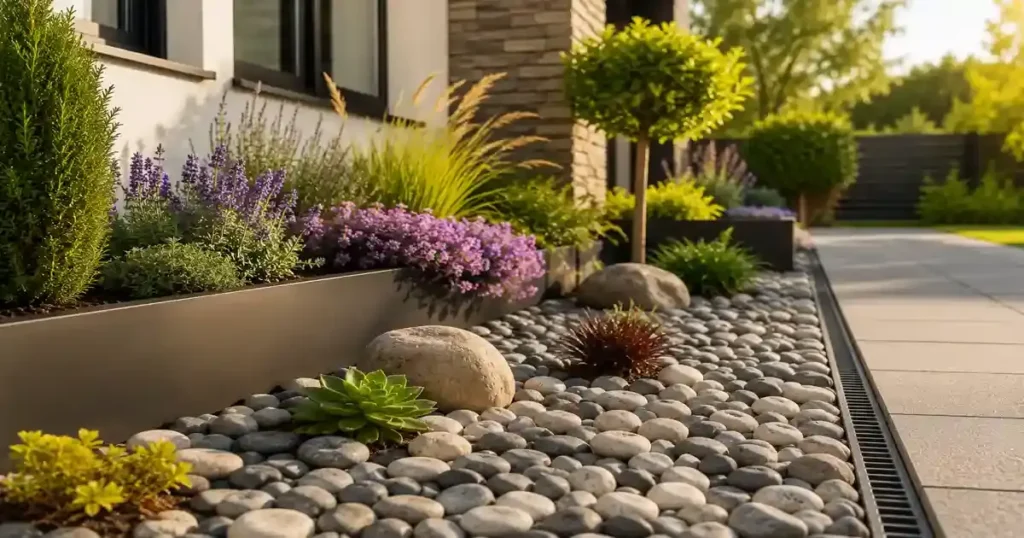
Across Georgetown, TX, more homeowners are ditching the traditional lawn for smarter, climate-smart landscapes. The reasons are simple: triple-digit heat, periodic water restrictions from Georgetown Utilities, relentless clay soil, and the rising cost of keeping a conventional lawn alive through July and August. If you’ve been looking for a better way, this guide is built for you.
Whether your home is near Georgetown Square, within a Sun City neighborhood, or in a newer development along Williams Drive, you’ll face many of the same landscaping challenges. Working with an affordable landscaping company in Georgetown, TX, for residential projects can make the transition easier, but this guide gives you the knowledge to plan it yourself or work smarter with a pro.
Below you’ll find 15 proven landscape designs, plant recommendations, xeriscape strategies, rock landscaping options, and a full comparison of traditional lawns vs. low-maintenance alternatives built for Central Texas conditions.
What Makes Landscaping Low Maintenance in Texas?
Low maintenance landscaping in Texas means designing a yard that works with the state’s heat, drought, and clay soil rather than against them. It uses drought-tolerant native plants, efficient irrigation, mulch, and hardscaping to reduce the time, water, and money a yard demands week to week.
- Reduced watering through drought-tolerant plants and drip irrigation
- Minimal mowing by replacing turf with native ground covers, gravel, or hardscaping
- Fewer fertilizer applications because native plants are adapted to lean Texas soil
- Long-term cost savings on water bills, lawn service, and chemical inputs
- Better durability through plants that actually survive Georgetown heat and drought
The goal is a yard that stays attractive between seasons without constant intervention.
Why Traditional Lawns Struggle in Texas
A traditional St. Augustine or Bermuda lawn needs roughly one inch of water per week during summer. In Georgetown, that often means irrigating three to four times a week during August. Combine that with Georgetown Utility Systems’ tiered water pricing and Stage 2 watering restrictions that kick in regularly, and the math stops working fast.
Clay-heavy soils common throughout Williamson County compound the problem. Clay expands when wet and cracks when dry, making it hard for grass roots to establish and survive. Fertilizer runs off rather than being absorbed, and drainage issues create pooling that damages turf and foundations alike.
If you’re already spending heavily on lawn upkeep, it’s worth reviewing the landscaping cost guide for Georgetown, TX in 2026 to understand where your money is actually going and where you can save.
15 Low Maintenance Landscaping Ideas Texas Homeowners Love
1. Native Texas Plant Gardens
Native plants are adapted to Georgetown’s climate over thousands of years. Texas Sage, Red Yucca, Blackfoot Daisy, and Esperanza need minimal supplemental water once established. Group them in beds with decomposed granite mulch for a clean, structured look.
2. Xeriscape Landscapes
Xeriscaping is the gold standard for drought tolerant landscaping Texas homeowners are adopting. It uses zone-based planting, efficient drip irrigation, and heavy mulching to cut water use by 50 to 75 percent versus a traditional lawn. Georgetown’s rebate programs from Georgetown Utility Systems have historically supported xeriscape conversions.
3. Decorative Gravel Landscapes
Decomposed granite and river rock require zero irrigation, suppress weeds when installed over quality landscape fabric, and handle Georgetown’s flash rain events without eroding. Pair with ornamental grasses like Gulf Muhly for texture and seasonal color.
4. Dry Creek Beds
Georgetown properties on slopes or near drainage corridors benefit enormously from dry creek beds. River rock channels direct stormwater away from foundations, reduce erosion, and look intentional year-round. No watering. Essentially no upkeep.
5. Texas Hill Country Landscaping Ideas
The Hill Country aesthetic translates perfectly to Georgetown’s western edges near Lake Georgetown. Think cedar, live oak, native wildflowers, limestone boulders, and gravel pathways. It blends with the natural surroundings while requiring almost no irrigation after establishment.
6. Mulched Landscape Islands
Replace open lawn areas with mulch beds anchored by low-water perennials. Hardwood mulch retains soil moisture, moderates soil temperature, and reduces weeding. Replant annually with seasonal natives to keep it fresh.
7. Pollinator Gardens
Pollinator gardens using Lantana, Salvia, Milkweed, and Blackfoot Daisy support Georgetown’s local butterfly and bee population, require minimal water once established, and produce color from spring through first frost.
8. No Grass Landscaping Ideas Texas Homeowners Are Adopting
Turf-free front yards are becoming increasingly popular in many of Georgetown’s newer neighborhoods. Using decomposed granite, flagstone paths, ornamental grasses, and shrub borders can create an attractive landscape without the need for mowing. For ideas and inspiration, take a look at successful front yard landscaping ideas Georgetown TX homeowners love for better curb appeal.
9. Rock Gardens With Native Plants
Boulders and river rock combined with Red Yucca, Sotol, and ornamental grasses create a dramatic, water-wise landscape. Rocks retain heat that extends the growing season for warm-season plants.
10. Ground Cover Lawns
Frog Fruit, Horseherb, and Buffalo Grass replace traditional turf with options that handle Georgetown heat, need far less water, and require mowing only a few times per year. Frog Fruit even spreads to fill gaps on its own.
11. Shade Gardens
Properties with established live oaks or cedar elms can use shade-tolerant natives like Native Sedges and Horseherb beneath the canopy. These areas are nearly self-sustaining once planted.
12. Raised Landscape Beds
Raised beds provide an immediate solution to Georgetown’s clay soil challenges. Fill with amended soil, plant natives or drought-tolerant perennials, and add drip irrigation. Drainage is perfect, weeds are minimal, and maintenance drops dramatically.
13. Artificial Turf Accent Areas
Not a full-yard replacement, but artificial turf in high-traffic side yards, pet areas, or narrow strips between hardscaping eliminates mowing, irrigation, and bare patches in those specific zones.
14. Drought-Tolerant Landscaping Texas Designs
Build plant palettes exclusively from drought-tolerant species: Agave, Yucca, Texas Mountain Laurel, Desert Willow, and Cenizo. These plants are not just survivors. They are showstoppers during bloom season.
15. Low Maintenance Landscaping Around House Texas Properties
Foundation beds around your home’s perimeter are often the most visible and most neglected. Replace high-water annuals with evergreen native shrubs like Yaupon Holly and Wax Myrtle, topped with a four-inch layer of hardwood mulch. Maintenance is reduced to just one or two times per year.
Low Maintenance Front Yard and Backyard Ideas for Georgetown TX
Front Yard Curb Appeal
Georgetown’s HOAs vary in flexibility, but most allow native plant beds, decomposed granite, and structured shrub borders. Texas Sage makes an outstanding border plant. Its purple blooms appear after rain events and require zero supplemental water in most seasons. Pair with a decomposed granite entryway and low ornamental grasses for a polished, low-water yard.
If you manage a weekly lawn service in Georgetown, TX for residential properties, transitioning even 40 percent of your front lawn to mulch beds and natives cuts your service time and cost significantly.
Backyard Retreat Concepts
Backyards offer more design freedom. Fire pit areas surrounded by decomposed granite and native privacy screens of Wax Myrtle or Yaupon Holly create functional outdoor living spaces. Add a dry creek bed along the fence line for drainage and visual interest. These designs look sharp year-round and require almost no seasonal replanting.
Best Low Maintenance Landscaping Plants for Texas Homes
Flowering Perennials
- Blackfoot Daisy — Blooms spring through fall, handles drought and rocky soils
- Salvia greggii — Hummingbird magnet, available in red, pink, and coral, nearly indestructible
- Esperanza — Bright yellow blooms from summer through frost, extreme heat tolerance
- Lantana — Pollinators love it, spreads to fill gaps, needs almost no water once established
Best Shrubs
- Texas Sage (Cenizo) — Purple bloom after rain, silver foliage, full sun, zero supplemental irrigation once established
- Yaupon Holly — Evergreen, tolerates clay and drought, can be shaped or left natural
- Wax Myrtle — Fast-growing native privacy screen, deer-resistant, requires almost no care
Ornamental Grasses
- Gulf Muhly — Stunning pink plumes in fall, drought-tolerant, deer-resistant
- Lindheimer Muhly — White seed heads, extremely tough, thrives in Georgetown’s rocky and clay soils
- Mexican Feather Grass — Airy texture, movement in the breeze, excellent in gravel or rock gardens
Best Ground Cover for Texas Heat
Ground covers are underused in Texas landscapes. They replace turf in shaded or awkward areas, suppress weeds, and stabilize soil.
| Plant | Water Needs | Sun Tolerance | Foot Traffic | Maintenance Level |
|---|---|---|---|---|
| Frog Fruit | Low | Full sun / Part shade | Moderate | Very Low |
| Horseherb | Very Low | Shade / Part shade | Low | Very Low |
| Buffalo Grass | Very Low | Full sun | High | Low |
| Native Sedges | Low | Shade | Low | Very Low |
| Silver Ponyfoot | Low | Full sun / Part shade | Low | Very Low |
Xeriscape Design Principles for Georgetown Homeowners
Xeriscaping is a landscaping method that reduces or eliminates the need for supplemental irrigation by using drought-tolerant plants, efficient watering systems, and moisture-retaining mulch. In Georgetown, TX, a well-executed xeriscape can cut outdoor water use by 50 to 75 percent compared to a traditional lawn.
Texas xeriscaping is not a bare gravel lot. Done well, it is a layered, intentional landscape that looks great all year. These are the core principles:
- Zone by water use. Group plants by how much water they need. Put your thirstiest plants closest to the house where they are easy to hand-water if needed.
- Use native plants. Texas natives are adapted to Williamson County’s soil, heat, and rainfall patterns. They establish faster and need far less input long term.
- Install drip irrigation. Drip systems deliver water directly to roots, cutting waste by 30 to 50 percent versus spray heads.
- Mulch heavily. A four-inch layer of hardwood mulch or decomposed granite reduces soil moisture loss and suppresses weeds.
- Reduce lawn area strategically. Start by replacing the hardest-to-irrigate sections first. Slopes, narrow strips, and areas under large trees are ideal candidates.
Low Maintenance Landscaping for Clay Soil in Georgetown, TX
Georgetown’s expansive clay soil is one of the biggest obstacles to a low-maintenance yard. Clay compacts under foot traffic, drains poorly after rain, and cracks in summer heat. The good news: the right plants and design strategies completely sidestep the problem.
- Choose plants that tolerate clay: Yaupon Holly, Wax Myrtle, Blackfoot Daisy, Inland Sea Oats, and Turk’s Cap all handle clay well.
- Build raised beds for herbs, vegetables, or plants that need better drainage.
- Install dry creek beds along natural drainage paths to move water away from planting beds and foundations.
- Avoid overwatering. Clay retains moisture far longer than sandy soils. Most Texas natives need far less irrigation than homeowners assume.
- Topdress with compost annually to gradually improve soil structure over time.
Traditional Lawn vs. Low Maintenance Landscaping in Texas
Compared to a traditional lawn, a native landscape or xeriscape uses less water dramatically, requires far less ongoing maintenance, and costs less to sustain year over year in the Texas climate.
| Feature | Traditional Lawn | Native Landscape | Xeriscape |
|---|---|---|---|
| Water Usage | High (1″/week+) | Very Low | Very Low |
| Mowing | Weekly in season | Rarely needed | Rarely needed |
| Fertilizer | 4 to 6x per year | None | None to minimal |
| Weed Control | Frequent | Occasional | Low with mulch |
| Annual Maintenance Cost | High | Low | Low |
| Long-Term Value | Depreciating | Appreciating | Appreciating |
Affordable Landscaping Ideas for Georgetown TX Homeowners
Low-maintenance landscaping does not require a large budget upfront. These approaches deliver results without breaking the bank:
- Start with one zone. Convert a single bed or strip at a time rather than redoing the entire yard at once.
- Buy small natives. One-gallon native plants cost $8 to $15 and establish just as fast as five-gallon specimens costing $40 to $60.
- Use decomposed granite. At $35 to $55 per cubic yard, it is one of the most cost-effective low-maintenance mulch alternatives for Texas landscapes.
- Collect seeds or divisions from neighbors. Gulf Muhly, Blackfoot Daisy, and Salvia divide easily. Georgetown’s active gardening community often shares starts.
- DIY drip irrigation. Basic drip kits from local hardware stores can irrigate a 200-square-foot bed for under $50.
How Much Water Can Low Water Landscaping Texas Designs Save?
Low water landscaping in Texas can reduce outdoor irrigation by 50 to 90 percent depending on the approach. Here is how the numbers break down for a typical 1,000-square-foot yard in Central Texas:
- Traditional lawn: 30,000 to 40,000 gallons per year for irrigation
- Xeriscape: 8,000 to 12,000 gallons per year
- Fully native landscape: Near zero supplemental water after the first establishment year
With Georgetown Utility Systems’ tiered water rates, those savings translate directly to lower monthly bills every summer. The more turf you replace, the more you save.
Common Mistakes to Avoid With Low Maintenance Landscaping
- Choosing the wrong plants. Not all drought-tolerant plants are right for Georgetown’s climate. Check that plants are suitable for USDA Zone 8b before you plant them.
- Overwatering during establishment. New native plants still need regular water for the first season. Most homeowners then overwater year two and beyond.
- Ignoring drainage. Poor drainage kills more plants in Georgetown than drought. Always address water flow before planting.
- Keeping too much lawn. Even reducing turf by 50 percent cuts maintenance load and water use dramatically.
- Not accounting for mature plant size. Texas Sage can reach five to eight feet wide. Plant accordingly or you’ll be pruning constantly.
HOA-Friendly Low Maintenance Landscaping in Georgetown TX
Georgetown has numerous HOA-governed communities including Sun City Texas, Teravista, and Wolf Ranch. Most allow native plants, structured gravel, and mulch beds as long as they are maintained and do not have visible bare soil or excessive weed growth. Before removing turf, review your HOA guidelines and submit a landscape plan if required. Well-designed native landscapes consistently pass HOA review when they look intentional and tidy.
When to Hire a Professional for Texas Landscape Design
Some projects make more sense with professional help:
- Full landscape renovations covering more than 1,000 square feet
- Drainage corrections and dry creek bed installations
- Hardscape work: patios, pathways, retaining walls
- Irrigation design and installation
- Large tree placement and planting
A qualified Georgetown landscaper will know local soil conditions, typical drainage patterns, and HOA requirements across different neighborhoods, saving you costly mistakes.
Frequently Asked Questions
What is the best low maintenance landscaping for Texas?
The best option is a native xeriscape: drought-tolerant Texas plants paired with decomposed granite mulch and drip irrigation. Plants like Yaupon Holly, Texas Sage, and Gulf Muhly need almost no supplemental water after their first establishment year and require only seasonal cleanup. It is the highest-performing, lowest-effort landscape design available for Central Texas conditions.
Which plants need the least maintenance in Texas?
Texas Sage, Red Yucca, Blackfoot Daisy, Esperanza, Gulf Muhly, Lindheimer Muhly, Lantana, and Wax Myrtle. All are native or well-adapted to Texas, tolerate Georgetown’s heat and clay soil, and need minimal care once established. No fertilizer, no frequent watering, no special treatment.
Is xeriscaping cheaper than a regular lawn over time?
Yes. The upfront installation cost is similar, but annual water and maintenance costs drop significantly. Most Georgetown homeowners recover xeriscape installation costs within two to four years through lower water bills and reduced lawn service fees.
What is the best ground cover to use in Texas heat?
Frog Fruit is the best choice for sunny areas. It spreads on its own, handles foot traffic, and needs no supplemental irrigation once established. Horseherb performs best in shaded spots under trees. Both are Texas natives and require almost zero maintenance year-round.
Can I replace my grass lawn with native plants in Texas?
Yes, and many Georgetown homeowners have done it successfully. If you live in an HOA community like Sun City, Teravista, or Wolf Ranch, review your guidelines and submit a landscape plan first. Start with front bed areas or the hardest-to-irrigate sections, then expand from there.
Does low maintenance landscaping increase home value in Texas?
Yes. Water-wise, well-designed landscapes improve curb appeal and are increasingly attractive to buyers in water-restricted Texas markets. Native and xeriscape landscapes signal lower operating costs, which adds real perceived value in Central Texas real estate.
What does low maintenance landscaping cost in Georgetown, TX?
Costs vary by project size and scope. A simple DIY mulch bed conversion typically costs only a few hundred dollars. Full xeriscape installations typically range from $3,000 to $10,000 or more depending on square footage, hardscape elements, and irrigation work. See the full Georgetown TX landscaping cost guide for 2026 for detailed pricing breakdowns.
Final Thoughts
Georgetown, TX homeowners have real options. You do not have to keep fighting a traditional lawn through August heat and Stage 2 water restrictions. These low-maintenance landscaping ideas Texas homeowners are adopting are proven, practical, and beautiful. Native plants thrive here. Decomposed granite handles our clay-heavy, drain-challenged soils. Xeriscape designs cut water use by more than half.
Start with one zone. Replace the hardest-to-maintain section first. Build from there. Whether you’re near Lake Georgetown, the Georgetown Square, or out on the Southwestern edge toward the Hill Country, there is a low-maintenance design that fits your property, your HOA, and your budget.
The best time to start was last spring. The second best time is right now. Transitioning from these low-maintenance landscaping ideas to a custom low-maintenance landscape design ensures your outdoor space is planned perfectly from the start.